What is Terasology?
Terasology is an open source voxel world. The project was born from a Minecraft-inspired tech demo and is becoming a stable platform for various types of gameplay settings in a voxel world.
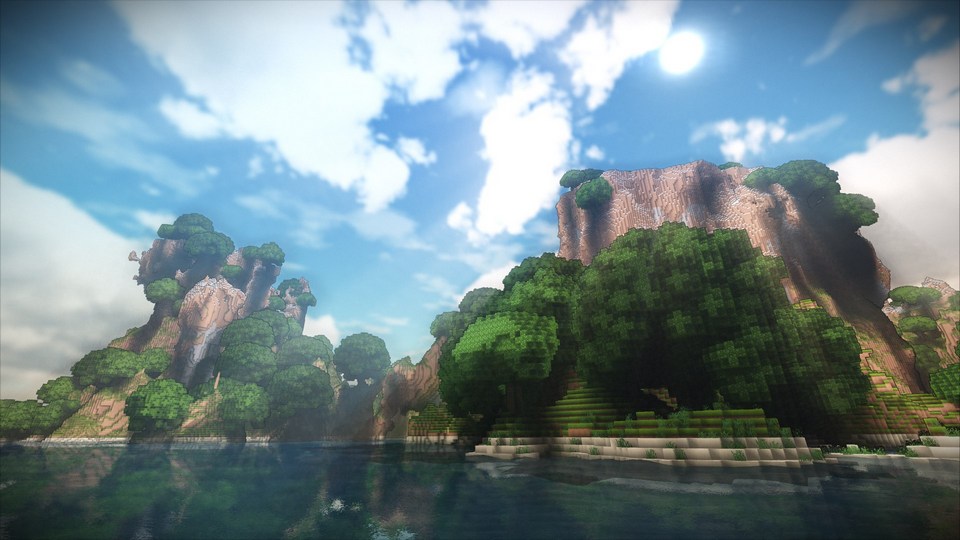
What is Lost?
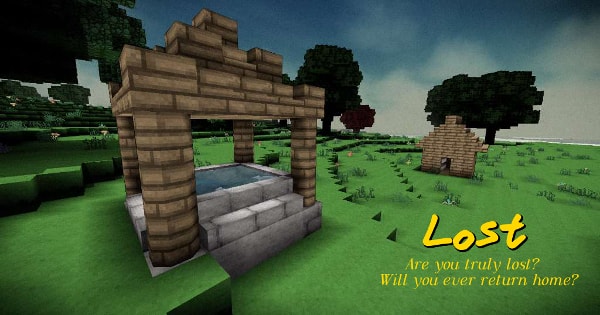
Lost is an exploration focused gameplay set in the Terasology world. The player crashes into a desolate island while
on an exploration survey of one of the potential life-supporting planets in the neighbouring galaxy.
He sets out on a quest to find a way back to his planet.
It was originally made by Nihal Singh.
The Drawbacks
Lost was originally released as a saved game in the Terasology Omega release. Further changes in the engine led to the saved game becoming incompatible. Also in the original gameplay cardinal directions are used as hints to the next challenge which makes adding new challenges difficult.
Revamped Lost design
The new design of Lost uses biome names as hints for where the next challenge would spawn. The hints are given
through a riddle poem.
A new world generator PolyWorld is used so that the Lost world can be procedurally generated and hence overcoming
the problem of Lost becoming incompatible with new engine releases.
The existing challenge Structure Templates are reused
and
a challenge is assigned to each biome.
Why PolyWorld?
PolyWorld uses a polygonal map generation algorithm to generate a world. It procedurally generates Voronoi diagrams and assigns each generated polygon a biome on the basis of moisture and elevation values. Hence each biome has polygonal boundaries which makes it easier (as opposed to noise based world generation algorithms) to calculate the spawn location for challenges.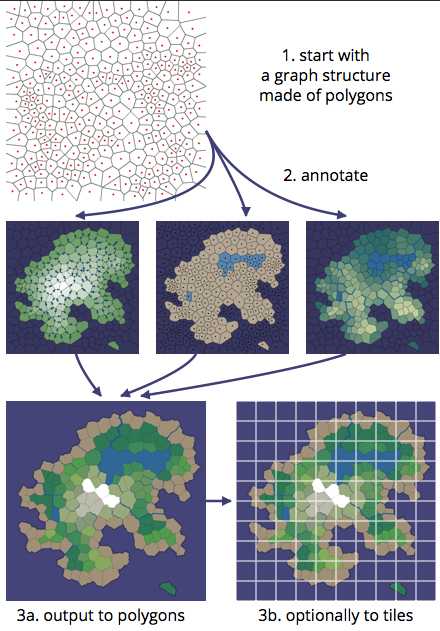
Experience at Terasology
It was great to work under the guidance of my mentors Rasmus 'Cervator' Praestholm and Josie 'Niruandaleth' Rueckert. From my first PR to a whole summer project it has been an amazing learning experience. The project has sparked newfound intrests in procedural generation and game design in me. I am looking forward to contributing further in Terasology in these fields.
References
Polygonal map generation by Amit Patel